
Container Tack Rooms For Saddles, Feed, And Show Gear.
Plan a lockable steel tack room around leather care, saddle racks, bridle hooks, blanket bars, feed separation, screened ventilation, lighting, security, property appearance, and delivery access.
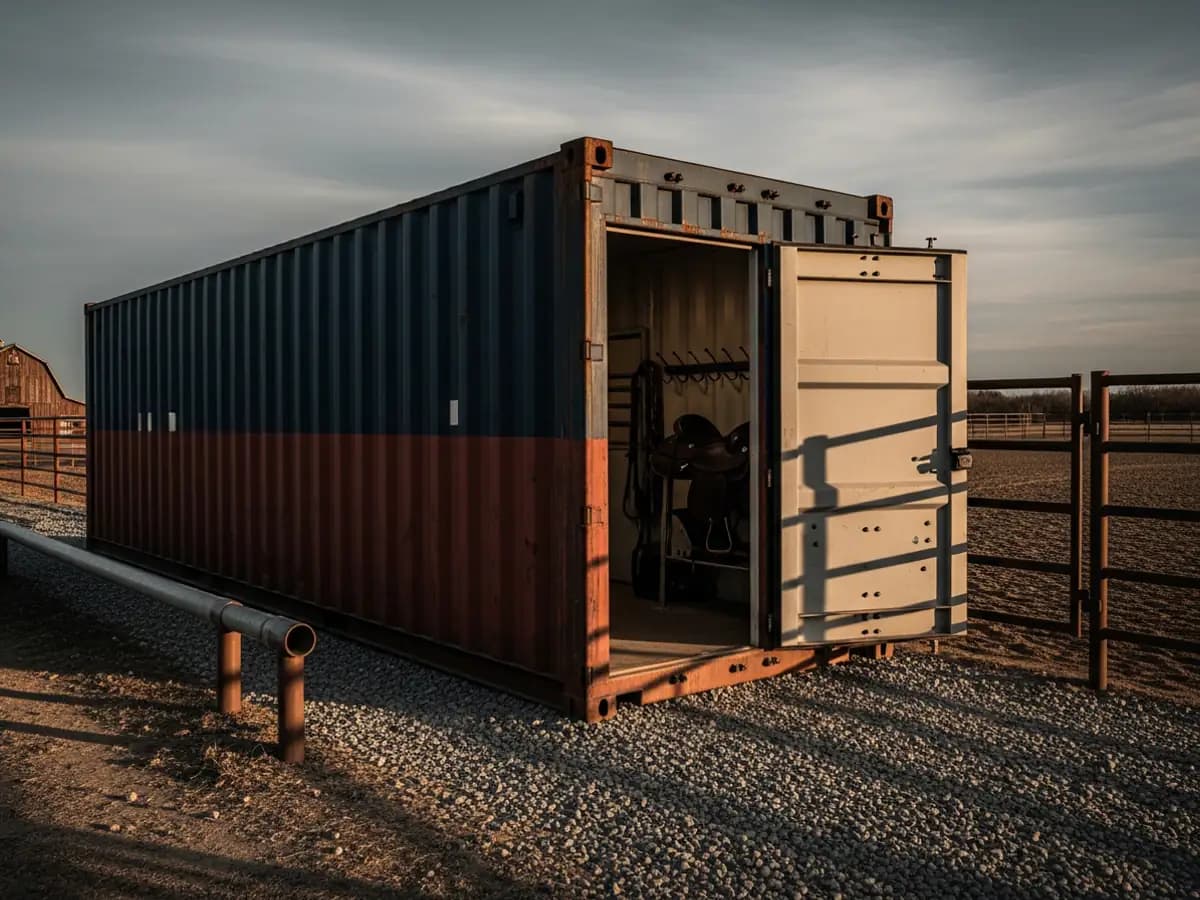
Tack Room Quote Inputs
Saddle count, bridle and blanket storage, feed separation, insulation, screened ventilation, electrical-ready needs, door style, property appearance, and delivery access.
A container tack room works when the inside is designed first.
The container is only the shell. The useful room comes from the saddle rack wall, bridle hooks, blanket bars, feed separation, screened ventilation, lighting-ready scope, door placement, and a site that drains and stays accessible.
Interior Layout
Plan the room around how tack gets used.
The audience is narrow, but the use cases are serious.
A tack room buyer is usually solving an active barn problem: expensive gear, limited space, pests, weather, theft risk, or a storage room that is too far from where the horses work.
Private Acreage
Keep saddles, bridles, blankets, tools, and supplements close to the barn, arena, pasture gate, or trailer parking.
Boarding Barns
Separate owner tack, lesson gear, feed, and maintenance supplies from the main barn while keeping expensive equipment lockable.
Ranches And Farms
Place a durable room beside working pens, equipment lanes, or outbuildings without framing a permanent structure first.
Show-Circuit Riders
Plan a portable tack base that can move with the property, seasonal use, or event setup when delivery access is part of the scope.
Climate + Pest Control
Protect leather by planning the envelope.
Climate control is the first real design decision.
Serious tack room planning starts with leather. Saddles, bridles, girths, and pads do not benefit from trapped heat, damp air, or feed dust. The quote should separate leather from feed, identify airflow, and make the electrical-ready boundary clear before accessories are added.
Insulation for the region
Texas summer heat and northern winter cold ask for different assumptions.
Screened airflow
Vents, fans, windows, and Dutch-door options should move air without inviting pests.
Moisture planning
Dehumidifier-ready power, drainage, shade, and support points help manage damp conditions.
Theft resistance
Lockbox options, controlled openings, and visible placement protect high-value gear.
Quote the room as working barn storage, not empty square feet.
Saddle racks, bridle hooks, blanket bars, shelves, lighting, outlets, doors, vents, windows, and finish color all affect how the room feels on a horse property.
Leather Storage
- Saddle racks
- Bridle hooks
- Blanket bars
- Cleaning bench
Feed And Supplies
- Sealed bins
- Supplement shelving
- Pad storage
- Tool wall
Air And Moisture
- Screened vents
- Fan-ready plan
- Dehumidifier-ready power
- Raised support
Electrical-Ready Scope
- Lighting
- Outlets
- Panel location
- Equipment boundary
Doors And Windows
- Personnel door
- Dutch-door option
- Windows
- Cargo-door strategy
Property Fit
- Paint color
- Trim accents
- Barn-facing side
- Approach path
A container tack room is not always better. It is different.
Traditional barn rooms make sense for many properties. A container earns attention when security, relocation, quick placement, and steel durability matter more than building a permanent framed room.
Questions Before Gear Moves In.
Start with the questions serious horse owners ask before they trust a steel room with saddles, bridles, feed, and show gear.
01How is a container tack room different from a wood-frame tack room?
A container tack room starts with a lockable steel shell that can be relocated if access, supports, utilities, and interior attachments are planned for the move. A wood-frame room may fit a permanent barn better, but it depends more on the site-built wall, door, window, and pest-control details.
02How do I keep leather from mildewing or cracking inside?
Start with a wind-and-watertight shell, then plan insulation, screened ventilation, shade, drainage, and electrical-ready options for fans, dehumidifiers, or other climate equipment. The goal is to avoid trapped heat and damp air around saddles, bridles, pads, and leather goods.
03Can I add windows and Dutch doors for airflow?
Yes. Personnel doors, Dutch-door options, windows, screened vents, and retained cargo-door strategies can be scoped around airflow, appearance, daily access, and security.
04How does the room stay cool in Texas summers or usable in colder regions?
The climate plan should match the region. Texas heat may push the scope toward insulation, shade, vents, fans, and dehumidifier-ready power. Colder regions may require different insulation, heating, and condensation planning before the quote is final.
05Can I move the tack room if I change properties or take it to a show?
A container tack room can be relocatable if the supports, utility hookup, interior attachments, and delivery access are planned for that goal. Moving a finished interior should be discussed before racks, shelves, or equipment are installed.
06What electrical options are standard and what can I add?
Electrical-ready scope can include lighting, outlet locations, panel placement, fan-ready planning, dehumidifier-ready planning, or other equipment assumptions. Final electrical work, hookup, and local code requirements should be confirmed by the responsible licensed party.
07Can I mount saddle racks, bridle hooks, and blanket bars on the walls?
Yes. Saddle racks, bridle hooks, blanket bars, shelving, bins, cleaning benches, partitions, and tool storage can be included in the interior layout so wall strength, aisle space, and daily access are considered together.
08How secure is it against theft compared to a barn tack room?
The steel shell, controlled openings, lockbox options, and visible placement can make a container tack room a strong security upgrade. Security still depends on door hardware, lock choice, site lighting, and how the room is used after hours.
09Will it rust in humid or rural conditions?
Containers are built for outdoor use, but finish, drainage, support points, ventilation, roof condition, and maintenance still matter. A quote should identify the container condition, exterior finish expectations, and how water will move away from the placement area.
Property And Interior Builds To Compare.
Storage
Overflow storage for tools, seasonal gear, and equipment. Delivered ready to lock up.
See Storage ContainersHousing
Container-based living and work space conversions, built to your plan.
See Housing BuildsBuilt To Suit
Custom modifications — doors, windows, vents, wraps, and electrical — to your exact spec.
See Built To SuitMobile Offices
Turnkey on-site offices with insulation, electrical, and door/window packages.
See Mobile Offices
Quote Prep
Bring the tack list into the first conversation.
Horse count and gear count
Saddle and bridle rack needs
Feed or supplement storage
Ventilation and insulation expectations
Door, window, or Dutch-door preference
Electrical-ready and delivery access
Get A Container Tack Room Quote.
Tell us what gear needs to fit, where the container will sit, how you want the racks and feed area arranged, and what climate, electrical, door, window, security, and delivery details matter.