Beverage
Outdoor bar or hospitality station
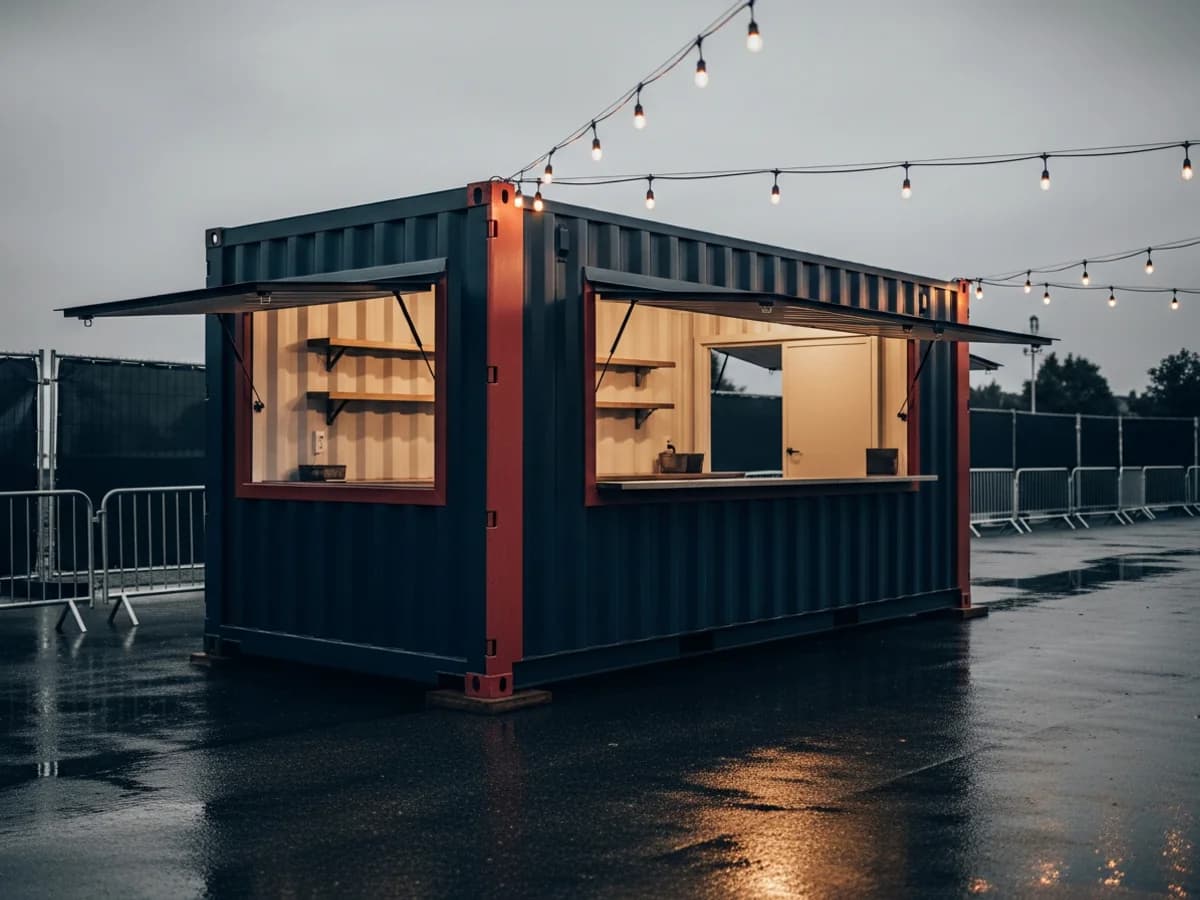
Plan the customer-facing windows, counter height, staff circulation, storage, lighting, and beverage-service assumptions before the shell is modified.
Turn a container into a service point with windows, counters, secure closure, finish, utility assumptions, approvals, delivery access, and event timing planned before fabrication.
Quote Inputs
Use case, service side, window count, counter needs, utilities, finish, delivery access, and operating deadline.
The steel shell matters, but the buyer decision is really about customer flow, staff access, service openings, utilities, branding, approvals, delivery, and how quickly the unit must be ready for the event or season.
Service Flow
Plan the counter, staff path, utilities, and event schedule together.
A beverage bar, ticket booth, retail kiosk, and concession point can share the same basic container shell, but the working layout should not be treated as interchangeable.
Beverage
Plan the customer-facing windows, counter height, staff circulation, storage, lighting, and beverage-service assumptions before the shell is modified.
Retail
Use the container as a secure retail footprint with display windows, lockable storage, exterior finish, and a layout built around how customers browse.
Venue
Keep the footprint compact while routing lines, staff access, signage, shade, security, and closing procedures around the event entrance.
Service
Separate the shell, service openings, utility assumptions, prep flow, and local approval path so the quote does not become guesswork.
These are the decisions that should be clear before fabrication: they affect openings, layout, utility assumptions, finish, schedule, and final quote detail.
FCC can scope the container and modification package. The operating rules, inspections, hookups, and venue approvals need to be owned by the responsible parties before the launch date.
Seasonal schedules compress design, fabrication, delivery, site prep, inspection, and opening-day setup.
Electrical-ready work can be scoped with the container, but final connection and code approval may require local professionals.
Alcohol, food-service, health, fire, and temporary-use rules are outside the container shell and must be confirmed locally.
Delivery access, grade, customer paths, and service-side orientation should be settled before the build is finalized.
These answers match the page's FAQ schema while loading collapsed so buyers can scan the questions before opening the constraints that matter.
Yes. Containers can be modified with service windows, counters, doors, storage, electrical-ready scope, paint, wraps, and finish details that support an event, retail, or hospitality use.
FCC can scope the container shell and modification package. Final appliances, plumbing, food-service equipment, alcohol-service requirements, inspections, and utility hookups should be confirmed in the project scope.
Often, yes. Permit, health, food-service, alcohol-service, event, and occupancy requirements vary by location and use. Confirm the approval path before committing to a final layout.
Paint, wraps, trim colors, awnings, and signage areas can be scoped into the build. Final artwork and sign rules should be confirmed before production.
Share the intended use, site type, service-window count, counter needs, utility assumptions, storage needs, finish expectations, event calendar, delivery path, and any permit notes already available.
Yes, if the build, utility approach, support points, and delivery access are planned for repeated moves. Some sites may still require separate event approvals.
Custom modifications — doors, windows, vents, wraps, and electrical — to your exact spec.
See Built To SuitSeasonal retail containers scoped around service windows, security, timing, and local approvals.
See Firework StandsContainer restroom builds for jobsites, events, and remote locations, with utilities scoped up front.
See Restroom ContainersQuote Prep
Use case
Service side
Utilities
Delivery path
Send the use case, site type, service-window count, finish expectations, utility assumptions, and event schedule. We'll shape the container scope around the customer flow.